There is a specific weight to a Denzel Washington performance that makes the term “movie star” feel almost insufficient. In 2020, The New York Times didn’t just call him a great actor; they named him the greatest actor of the 21st century.Denzel Washington Oscar winning movies represent some of the most powerful performances in modern cinema, earning both Academy Awards and global recognition.
But to understand how he reached that summit, you have to look at the intersection of his trophy cabinet and his global impact. We’re talking about a man who has appeared in films that have grossed over $5.1 billion worldwide while simultaneously remaining the Academy’s most consistent darling.Films like Training Day are often highlighted when discussing Denzel Washington Oscar movies.
Here the Denzel Washington Oscar Winning Movies
This isn’t just a list of movies; it’s a breakdown of the “Denzel Standard.” Below, we explore the Denzel Washington movies that won Oscars, dominated the global box office, and redefined the art of the screen.These performances place him firmly among actors known for Denzel Washington award winning movies with lasting impact.
The Statistical Titan: Denzel at the Academy Awards
Before we dive into the films, let’s look at the sheer math of his greatness. Denzel Washington is one of only nine actors in history to be nominated for an Oscar in five different decades (the 1980s, ’90s, 2000s, ’10s, and ’20s).
The Oscar Scorecard
| Year | Movie | Category | Result |
| 1988 | Cry Freedom | Best Supporting Actor | Nominated |
| 1990 | Glory | Best Supporting Actor | Won |
| 1993 | Malcolm X | Best Actor | Nominated |
| 2000 | The Hurricane | Best Actor | Nominated |
| 2002 | Training Day | Best Actor | Won |
| 2013 | Flight | Best Actor | Nominated |
| 2017 | Fences | Best Actor / Best Picture | Nominated |
| 2018 | Roman J. Israel, Esq. | Best Actor | Nominated |
| 2022 | The Tragedy of Macbeth | Best Actor | Nominated |
1. Glory (1989): The Birth of a Legend
The Recognition: Academy Award for Best Supporting Actor (Win)
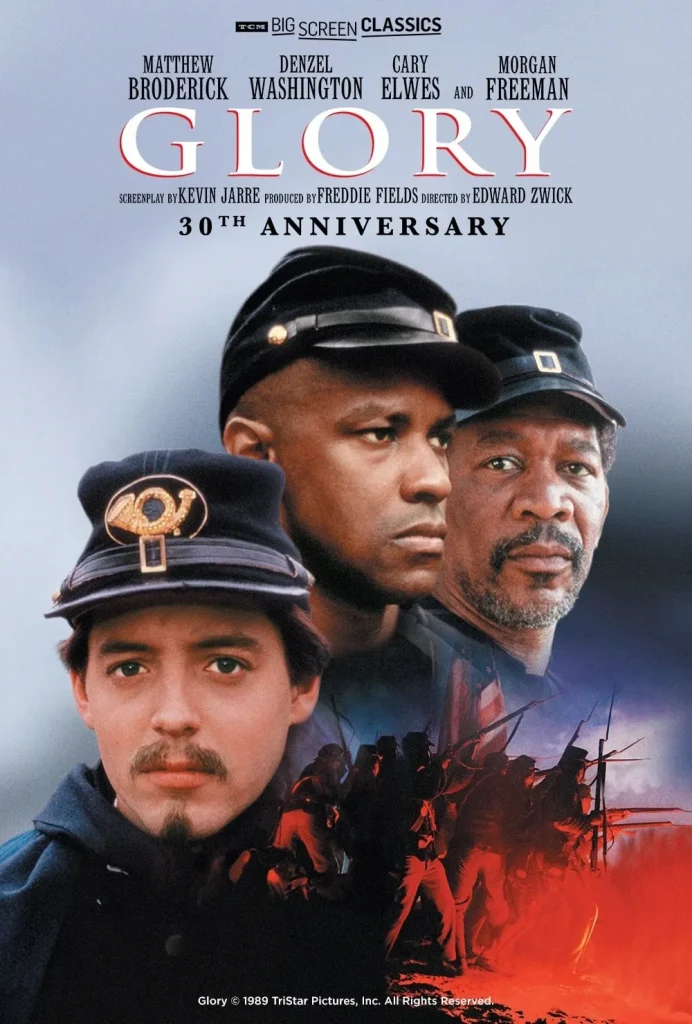
If you want to witness the exact moment Denzel Washington transitioned from a “working actor” to a “cinematic force,” watch the campfire scene in Glory.
Playing Private Silas Trip, a defiant, formerly enslaved man fighting for the Union in the 54th Massachusetts Infantry Regiment, Denzel didn’t just deliver lines—he channeled generations of trauma.
The “Tear” Heard Round the World
The film is globally recognized for its brutal, honest depiction of the American Civil War, but it’s most famous for the flogging scene. Denzel’s character is whipped for “desertion” (he was actually just looking for shoes). As the whip strikes, the camera holds on his face. He doesn’t scream. A single tear rolls down his cheek.
That tear wasn’t in the script. It was a visceral, human response to the role, and it secured him his first Oscar. According to Oscars.org, this win was a watershed moment for the representation of Black soldiers in historical cinema.
2. Training Day (2001): The Villainous Masterclass
The Recognition: Academy Award for Best Actor (Win)
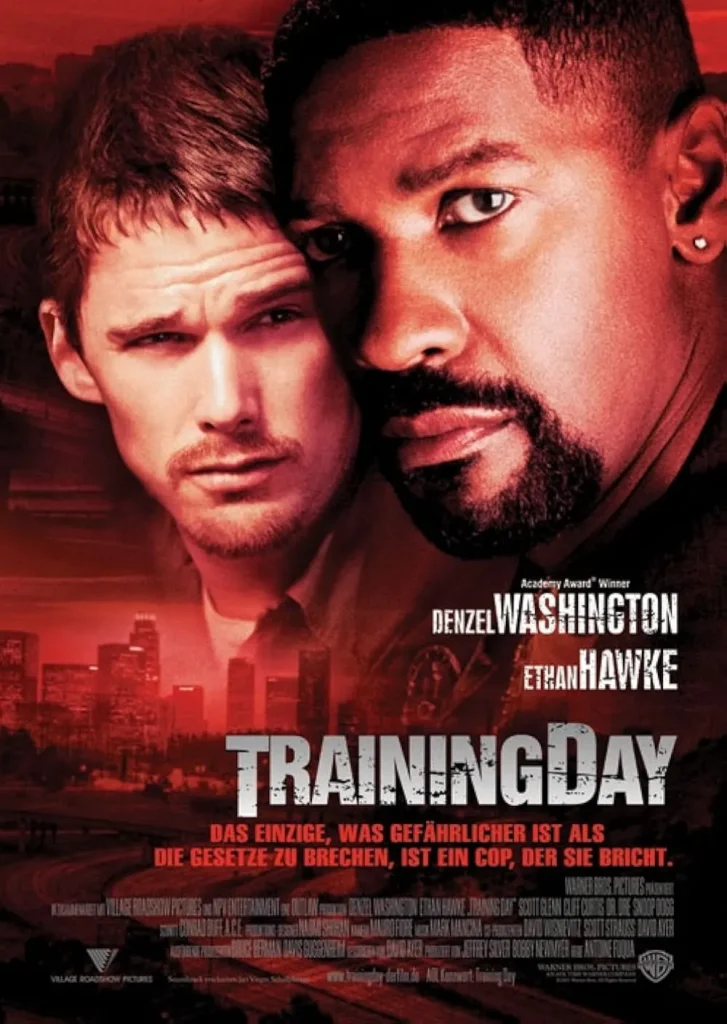
For years, Denzel was the “hero.” He was the moral compass. Then came Detective Alonzo Harris.
Training Day is a masterclass in moral ambiguity. Washington plays a corrupt LAPD narcotics officer who is as charismatic as he is deadly. He spends the entire movie gaslighting Ethan Hawke’s rookie character (and the audience) into believing his brand of “street justice” is the only way to survive.
Global Recognition and Cultural Impact
The film was a massive hit, grossing over $105 million on a modest budget, but its legacy is in its dialogue. “King Kong ain’t got sh*t on me!” is arguably the most quoted line of the 2000s.
Denzel’s win was historic. He became only the second African American man to win Best Actor, following in the footsteps of his mentor and friend, Sidney Poitier. What made it truly impressive was that he won for playing a villain—a rarity for leading men of his stature.
3. Malcolm X (1992): The Greatest “Snub” in History
The Recognition: Academy Award for Best Actor (Nomination) | Silver Bear for Best Actor (Berlin)
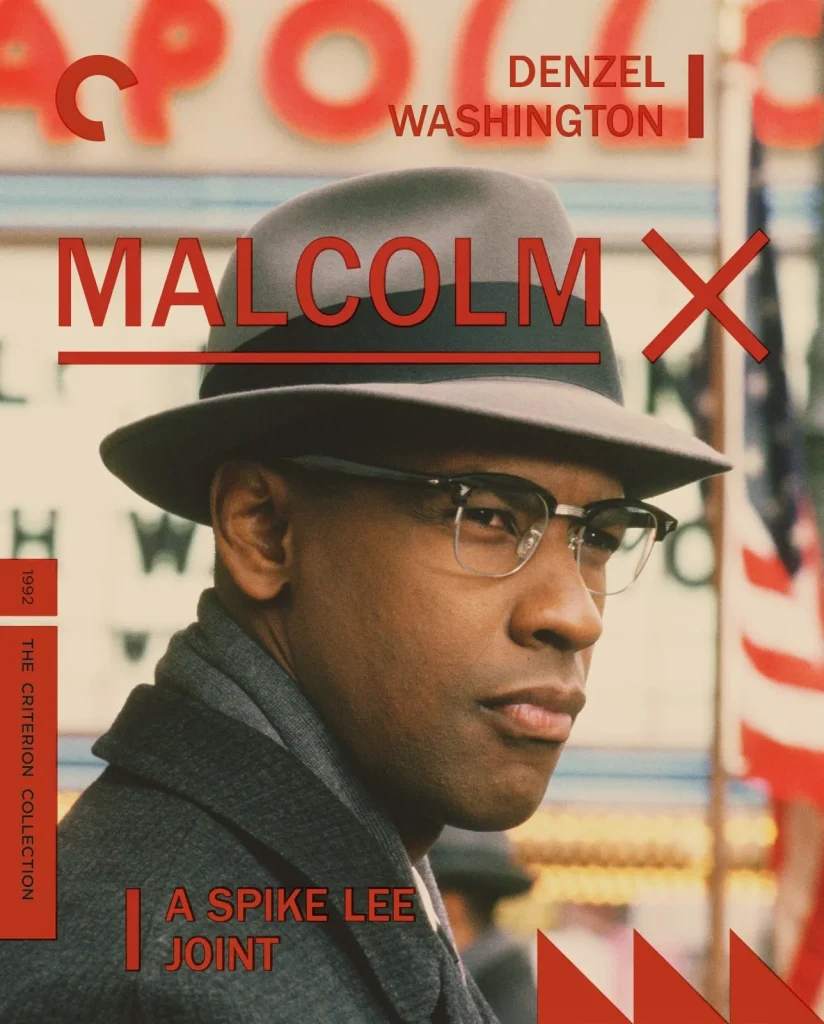
Ask any serious film critic, and they will tell you: Denzel Washington should have won the Oscar for Malcolm X. While Al Pacino took the trophy that year for Scent of a Woman, Denzel’s portrayal of the civil rights leader is widely considered one of the five greatest performances in the history of film.
The Preparation
Denzel spent an entire year preparing for this role. He stopped eating pork, memorized the Quran, and interviewed dozens of Malcolm’s associates. The result is a performance that is less an “imitation” and more a “possession.”
As noted by Collider, the film’s three-hour runtime allows Denzel to show the evolution of the man—from the street-hustling “Detroit Red” to the enlightened global leader. It remains a pillar of global historical cinema.
Denzel Washington Movies List: All Films Ranked from Best to Worst
Among Denzel Washington Oscar winning movies, Training Day stands out as his most celebrated Academy Award–winning role.
4. Philadelphia (1993): The Unsung Global Hero
The Recognition: Massive Global Box Office ($206M+) | Cultural Recognition
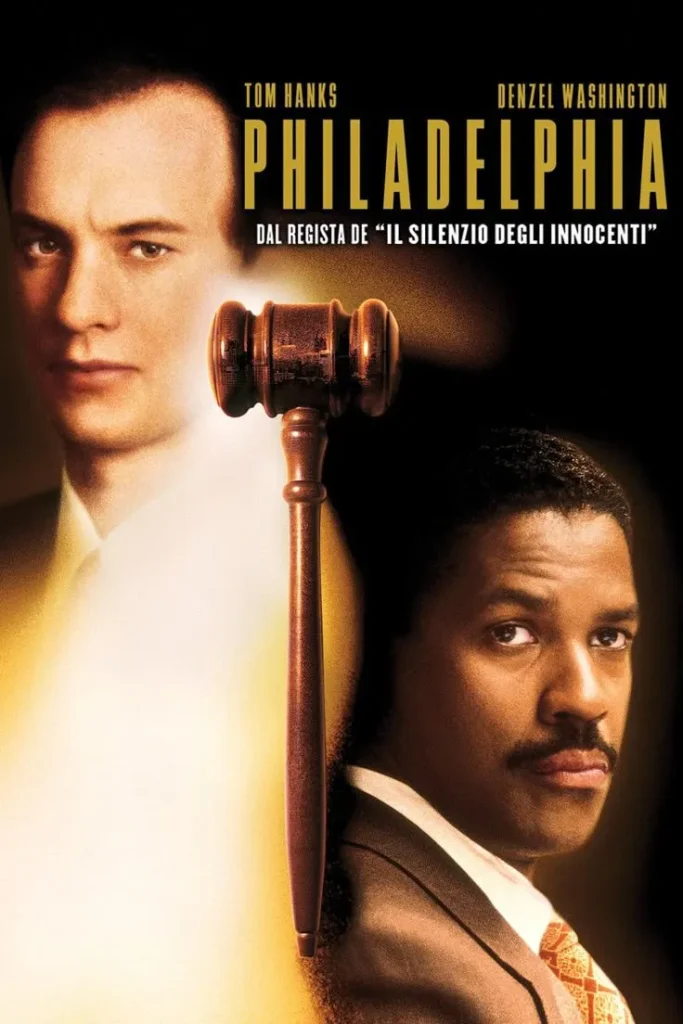
While Tom Hanks won the Oscar for Philadelphia, the movie wouldn’t work without Denzel Washington. Playing Joe Miller, a homophobic lawyer who takes on a wrongful termination case for a man with AIDS, Denzel acts as the “proxy” for the audience.
Shifting Global Perspectives
In the early 90s, the AIDS crisis was shrouded in stigma. Philadelphia was a global phenomenon because it forced mainstream audiences to confront their prejudices. Denzel’s character arc—from disgust to empathy—is the heartbeat of the film.
The New York Times praised his “subtle, grounded performance” as the necessary anchor for the film’s heavier emotional beats. It proved that Denzel didn’t need to be the “lead” to define a movie’s success.
What separates Denzel Washington Oscar winning movies from other performances is the emotional depth and realism he brings to each character.
5. Fences (2016): From Stage to Screen
The Recognition: Academy Award for Best Actor (Nomination) | SAG Award (Win) | Tony Award (Win)
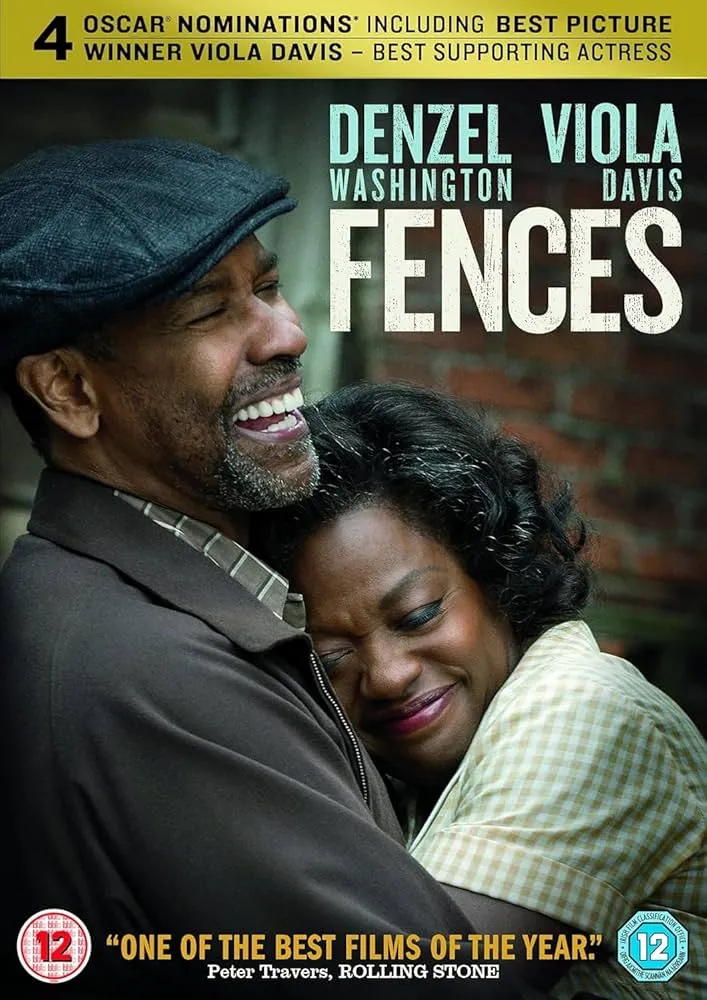
Denzel Washington’s relationship with the work of playwright August Wilson is perhaps the most important collaboration of his late career. In Fences, he directs himself as Troy Maxson, a man whose dreams were deferred by the racial barriers of the 1950s.
A Triple Threat
Denzel won a Tony Award for this role on Broadway before bringing it to the screen. The film is a dialogue-heavy, emotional powerhouse that earned him a Best Picture nomination as a producer and a Best Actor nomination.
His chemistry with Viola Davis is electric. The “How come you ain’t never liked me?” scene is studied in acting schools globally as the pinnacle of dramatic tension.
6. The Hurricane (1999): The Fight for Justice
The Recognition: Academy Award for Best Actor (Nomination) | Golden Globe (Win) | Silver Bear (Berlin)
Playing Rubin “Hurricane” Carter, a middleweight boxer wrongfully convicted of a triple murder, Denzel showcased his incredible physical and psychological range.
He trained for over a year to look like a professional boxer, but the true strength of the performance is in the quiet, isolated scenes in the prison cell. The film gained massive international attention for its spotlight on the American legal system’s flaws.
Several critics consider these films the gold standard when discussing Denzel Washington Oscar winning movies in Hollywood history.
Comparison: Box Office vs. Critical Acclaim
| Movie | Global Gross | Rotten Tomatoes Score | Oscar Outcome |
| American Gangster | $269.7M | 81% | Golden Globe Nom |
| The Equalizer | $192.3M | 61% | Global Action Hit |
| Flight | $161.8M | 77% | Oscar Nominated |
| Gladiator II | $400M+ (Est.) | 75% | Potential 2025 Nom |
The “Denzel Method”: How He Achieves Global Mastery
Why do these movies win awards? It comes down to his preparation. Denzel doesn’t just “show up.”
- Immersion: For Flight, he spent hours in flight simulators until he could land a plane (virtually) in his sleep.
- Voice: For The Tragedy of Macbeth, he worked with vocal coaches to find a “naturalist” way to speak Shakespearean verse that didn’t feel “stagey.”
- Physicality: Even in his late 60s, for The Equalizer trilogy, he performed many of his own stunts to ensure the audience felt the “weight” of every punch.